 FR
FR
 ES
ES


It's called Ndar in Wolof, named after the island on which it stretches between the Senegal River and the Atlantic Ocean. The former capital of French West Africa, Saint-Louis has been a UNESCO World Heritage Site since 2000 — a recognition it earned through centuries of history.
A City Between Two Waters
Saint-Louis has a unique geography. The city unfolds on a long, narrow island, connected to the mainland by the Faidherbe Bridge, and to the Langue de Barbarie by a smaller bridge. On each side: either the river or the ocean. This configuration gives Saint-Louis an insular character, a distinct atmosphere that travelers often describe as a time capsule between Africa and Europe.
The ochre and yellow facades of colonial buildings, their wrought-iron balconies, shaded inner courtyards — all of this recalls Mediterranean architecture while remaining deeply African. Some buildings are deteriorating, inevitably. But it's precisely this patina, this light filtering through cracked walls, that gives Saint-Louis its unmistakable character.
The Faidherbe Bridge: The City's Emblem
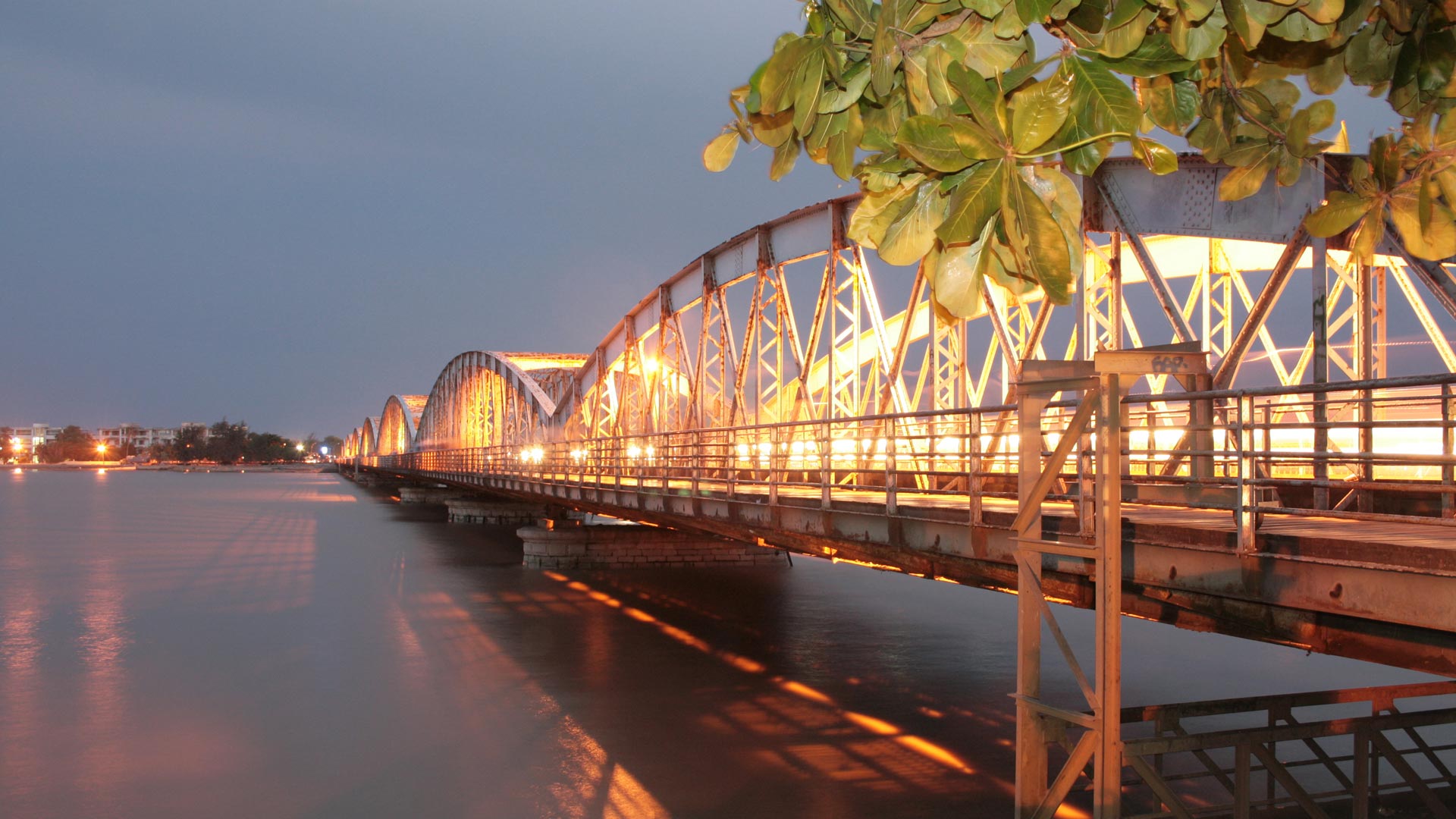
Designed by engineers from Gustave Eiffel's firm and completed in the late 19th century, the Faidherbe Bridge spans more than 500 meters across the Senegal River in seven metal spans. Its central span was once movable to allow ships to pass. Today, the bridge carries heavy daily traffic while bearing over a century of history on its shoulders.
At sunset, when golden light reflects off the river and the city's silhouettes are framed behind it, the Faidherbe Bridge becomes the most photographed scene in Senegal. It's an appointment not to miss.
Guet N'Dar: The Fishermen's Quarter
Just across from the island, on the Langue de Barbarie, the Guet N'Dar quarter stands in sharp contrast to the colonial atmosphere of the historic town. It's one of the densest fishing quarters in West Africa. Pirogues pile up on the beach, nets dry in the sun, and the air carries the scent of dried fish and salt. The barre — the dangerous passage between the lagoon and the ocean — is crossed daily by fishermen whose courage is legendary.
The Jazz Festival: A World-Class Event
Each May, Saint-Louis hosts one of Africa's greatest jazz festivals. For over twenty-five years, musicians from around the world have gathered in the squares and inner courtyards of the old town to play until dawn. The event draws thousands of visitors and transforms the city into an open-air stage for several days.
Surroundings: Djoudj and the Langue de Barbarie
About thirty kilometers from Saint-Louis, Djoudj National Bird Sanctuary is listed as a UNESCO World Heritage Site. Between November and April, more than a million migratory birds stop here: pelicans, flamingos, cormorants, egrets. It's one of Africa's premier ornithological sites.
Closer to town, the Langue de Barbarie nature reserve is home to colonies of terns, migratory birds, and — in some years — sea turtles coming to lay eggs on its deserted beaches.
How Long to Stay?
Saint-Louis deserves at least two days. Three days allow you to visit the surroundings, witness a dawn fishing departure, and wander the alleyways at a relaxed pace. Bird enthusiasts should add an extra day for Djoudj.